

EDI vs API
If you’re in shipping or logistics, chances are you’ve heard the terms EDI and API thrown around. These two methods of integrating systems are both used to get your orders from A to B, but they work pretty differently. And in a world where speed, accuracy, and real-time info are everything, understanding the difference could help you pick the smarter option for your business.
Let’s break it down, without the jargon overload.
First, What’s EDI?
EDI (Electronic Data Interchange) is the OG of shipping data transfers. It’s been around for a while, and here’s how it works in a shipping context: your system sends a file, usually CSV or XML, to your carrier. That file includes all the shipping info they need, and it basically says, “Here are the packages, get them moving.”
Sounds simple, right? That’s because it is.
The file is one-way (shipper → carrier), so it’s fast and easy to set up. The carrier doesn’t check your data for errors or bounce it back if something’s off. No validation. No feedback loop. It’s a bit like dropping your packages at the post office with a handwritten note and hoping for the best.
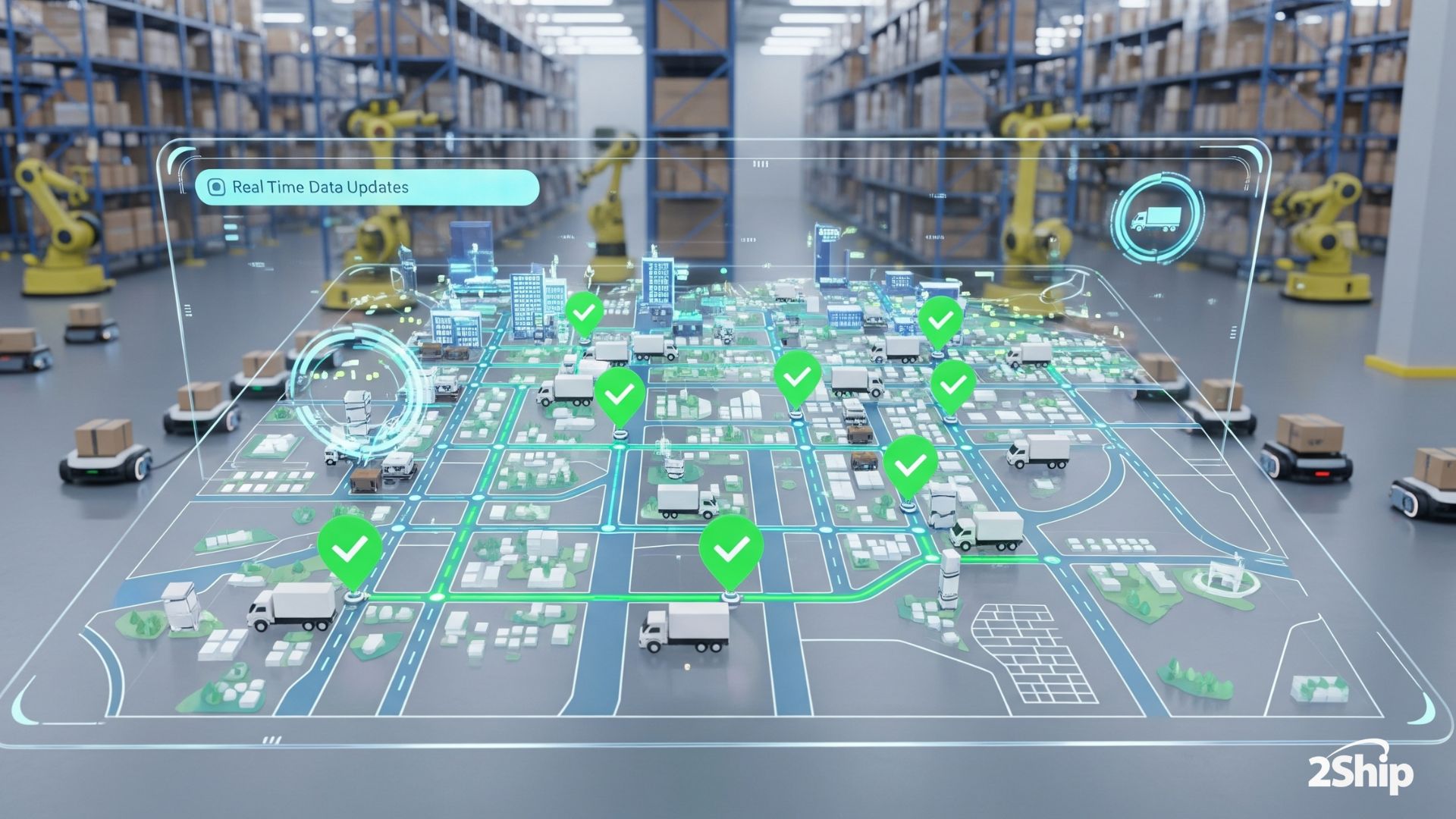
Now, Meet API | EDI vs API
API (Application Programming Interface) is the newer kid on the block, and it’s built for two-way, real-time communication between systems. It’s like EDI’s smarter, more interactive sibling.
Instead of just throwing a file over the fence, APIs let your system talk to the carrier’s system, instantly. You can send data and get data back, pricing, tracking info, labels, delivery updates, you name it.
Plus, APIs follow strict protocols, which means integration is cleaner, faster to roll out, and works better across a ton of platforms. That’s why APIs are taking off in the world of cloud-based shipping systems.
How APIs Are Being Used in Shipping Today
Thanks to the rise of cloud-based software, connecting different platforms via API has become the go-to move for shipping pros. And it makes sense, APIs make real-time, two-way data flow possible, which means everyone in the chain (carriers, shippers, customers) gets quicker, more accurate info, exactly when they need it.
In the last few years, this kind of real-time integration has seriously taken off.
Major Australian carriers have made APIs available for while now, but now even the smaller couriers are jumping in with API systems that go way beyond the basics. We’re talking:
- Creating consignment notes
- Generating labels
- Sending manifests
But that’s not all, these APIs can also handle:
- Live shipment tracking
- Booking pickups
- Supplying real-time rate or price estimates
- Sharing Proof of Delivery (POD) data, even POD images
Compare that with the older EDI setup, where things like consignment notes, labels, and manifests are all handled locally in your TMS using stored data. Need a rate? That comes from a static lookup, not a live connection. Tracking? Usually just a link to a carrier’s tracking page or a file uploaded later.
With APIs, you’re plugged in and talking to the carrier in real-time, sending and receiving info constantly. It’s not just faster; it’s smarter.
The Practical Perks of an API-Based Approach
Carriers are leading the charge with APIs because they control how data flows into their systems – and that control pays off in a few key ways:
Cleaner, Validated Data
APIs allow carriers to instantly check and reject bad data, like mismatched postcodes or missing contact info. That means fewer delivery errors, less manual work, and better overall efficiency.
Consistent Labels That Actually Work
When labels are generated via API, carriers can enforce formatting rules. That ensures barcodes scan properly, data is clearly presented, and no duplicate or misaligned labels slip through, avoiding delays in transit.
Blocking Non-Compliant Shipments
If a shipment doesn’t meet the carrier’s criteria – like oversized items or restricted goods, the API can block it before it enters the system. This saves time, avoids costly mistakes, and keeps operations smooth.
Standardized Integrations
Instead of custom setups for every shipper, carriers can maintain one standard API that works across many partners. This simplifies updates and cuts integration costs on their end.
What Shippers Get Out of It
It’s not just the carriers who benefit – shippers also see major gains when APIs are in play:
- Live pricing pulled straight from the carrier means accurate rate estimates for every shipment.
- Real-time tracking (often via webhooks) keeps your systems and customers in the loop as events happen.
- Pickup booking can happen right from your dashboard – no need to leave your platform or chase down reps.
In short, APIs make the whole process smarter, faster, and more reliable, on both ends.
So, What’s the Catch?
Like anything, APIs come with a few trade-offs. Here’s what to watch for:
- Internet dependence: If your connection drops or the carrier’s API goes down, you might not be able to create shipments or print labels until it’s back online.
- Response time: Since you’re waiting for the carrier’s system to respond, rate requests and label generation can take a few seconds longer than local (EDI-based) setups.
For high-volume shippers, this might be a dealbreaker. But many platforms, including 2Ship, offer smart workarounds like pre-importing orders, then rating and shipping in batches so you can keep things lightning-fast.
It’s clear where things are heading. More carriers are leaning into APIs to power everything from rates to returns. And that means shippers will either need to build their own API connections or use a third-party tool that’s already plugged in.
Good news? 2Ship’s already done the hard part for you. We’ve built direct API integrations with tons of carriers, so you can take advantage of all these benefits without the IT headache. A single 2Ship API integration and you’re done.
EDI vs API: Final Thoughts
EDI had a great run and it’s still useful in some scenarios, but APIs are the future of smart, responsive shipping. They make everything more immediate, more accurate, and more connected.
And with platforms like 2Ship, you don’t have to choose between flexibility and functionality – you get both.
Want to see API-based shipping in action? Let’s talk. We’ll show you how easy it is to ship smarter, not harder.